ADVERTISEMENT
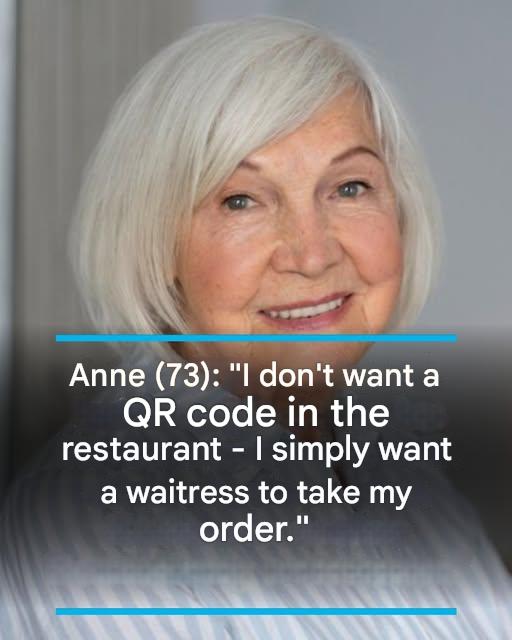
What’s become commonplace for many people feels to 73-year-old Anne like yet another confirmation that older people no longer matter. Last weekend, she went out to eat with a friend, expecting nothing special. A table. A menu. A waitress asking what she’d like to drink. But those days seem to be definitively over.
« There was absolutely nothing on the table, » Anne recounts. « No menu, no paper. Just a black and white box. I didn’t even know what it was. »
This box turned out to be a QR code. The waitress pointed it out and said Anne could open the menu with her phone. That’s where the problem lay. Anne doesn’t have a smartphone. And she doesn’t want one.
« I’m 73. I’m not going to sit down at a table with a computer to order a cup of soup. »
Without a phone, you’re no longer included.
In Anne’s view, older people are increasingly excluded. Perhaps not intentionally, but the effect is the same. “There are so many people my age who don’t have a smartphone. Or they have one, but no idea how it works. Yet everyone acts as if they’re expected to be able to do it.”
No phone, no menu. No menu, no order. And no order, no food. “It’s actually quite simple. If you can’t keep up digitally, you’re out of luck.”
She emphasizes that it’s not about unwillingness. “I’ve worked my whole life. I’ve always adapted. But now it seems like suddenly everything has to be done via screens and codes. Even something as simple as going out to eat.”
