ADVERTISEMENT
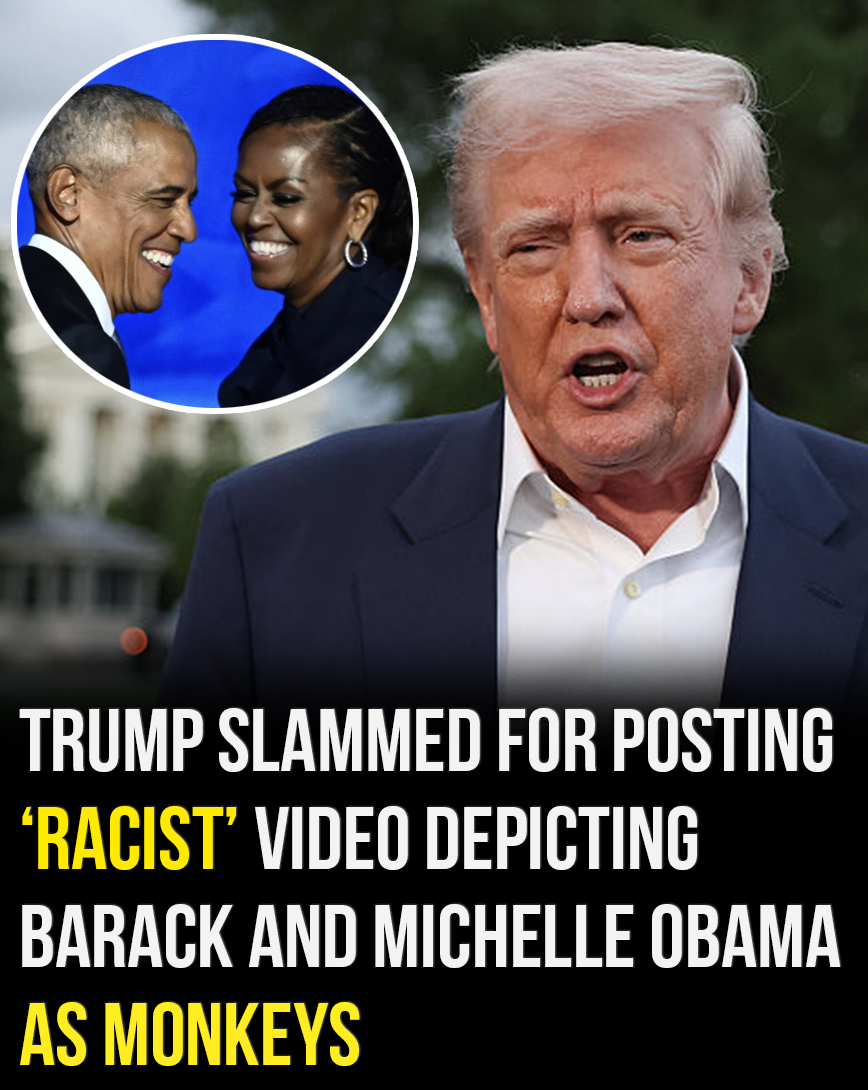
The White House, represented by Press Secretary Karoline Leavitt, attempted to neutralize the controversy by framing it as a misunderstanding of internet subculture. Leavitt characterized the outcry as “fake outrage,” suggesting that the video was a harmless meme meant to be a humorous commentary on political dynamics. The administration’s stance was that the public’s focus should remain on pressing national issues rather than a fleeting digital animation. This defense, however, did little to appease those who pointed out that memes do not exist in a vacuum and that the selection of primates specifically for the Obamas carried historical baggage that cannot be easily dismissed as accidental.
This incident is part of a broader, more frenetic period of communication from Trump, who reportedly made over 60 posts within a three-hour window on the same day. This digital blitz included everything from renewed attacks on Dominion Voting Systems and promotion for an upcoming Super Bowl advertisement to a suggestion that his likeness be added to Mount Rushmore. The sheer volume of content often serves to dilute the impact of individual controversies, but the “monkey” imagery has proven to have a longer shelf life due to its visceral nature.
From a statistical perspective, the controversy highlights the demographic sensitivities that define modern American elections. In the 2020 election, the Black electorate voted overwhelmingly for the Democratic ticket, with approximately 92% supporting Joe Biden. Messaging that utilizes historically racist tropes can have a measurable impact on voter sentiment and turnout. Furthermore, recent polling suggests that a significant majority of Americans—roughly 65% in some non-partisan surveys—believe that racial tensions have increased over the last decade. Incidents like this Truth Social post are frequently cited by sociologists as contributing factors to that perceived decline in social cohesion.
The silence from Barack and Michelle Obama has been notable. Historically, the former First Couple has maintained a policy of dignity and restraint in the face of personal attacks, often choosing to speak through their philanthropic work or broad policy statements rather than engaging in the “mud-slinging” of the 24-hour news cycle. Their lack of response, however, has not prevented the issue from becoming a central talking point for civil rights organizations like the NAACP, which described the video as a “step backward” for the country’s racial progress.
For supporters of the former president, the video represents a form of “anti-woke” defiance—a rejection of what they perceive as overly sensitive “political correctness.” They argue that the video was clearly a parody and that the race of the subjects should not make them immune to caricature. This perspective often views the backlash itself as a political weapon used by the left to distract from debates over election integrity and economic policy.
Conversely, the controversy underscores the ongoing challenge of defining the boundaries of political speech in the digital age. When does a meme become a tool for harassment? When does satire cross the line into racial provocation? For many, the answer lies in the historical context of the imagery used. The trope of the “primate” comparison has been used to justify everything from slavery to Jim Crow laws, making its appearance in modern political discourse especially jarring for those who study American history.
As the nation moves closer to the next election cycle, the intensity of this rhetoric shows no signs of waning. The episode highlights the reality that in today’s political environment, the line between an official statement and an internet meme is increasingly non-existent. For some, this is a refreshing form of authenticity; for others, it is a dangerous degradation of the office of the presidency. Regardless of the interpretation, the visual of the Obamas as monkeys remains a potent symbol of the deep-seated divisions and unresolved racial tensions that continue to shape the United States in 2026.
